

Are Scented Candles Safe? Understanding Candle Ingredients and Indoor Air Quality

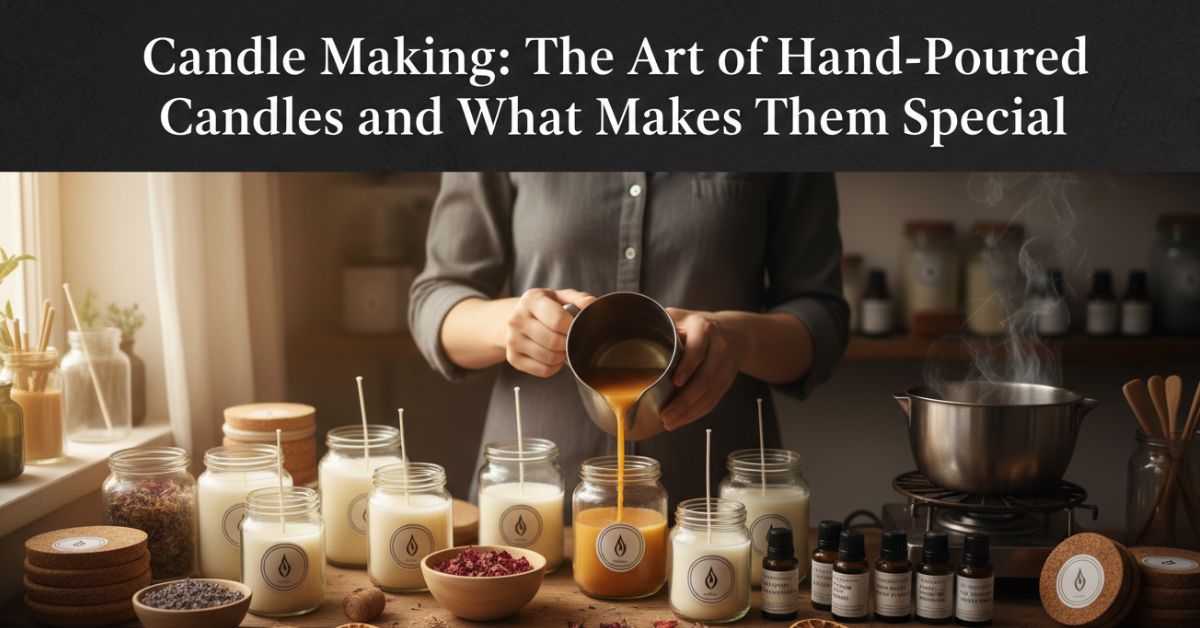
There is something soothing about the warm glow of a candle. Its soft light gently transforms a room, while the fragrance gradually fills the space, creating a relaxing and inviting atmosphere. Candles are no longer just a source of illumination. Today, they are an essential part of home décor, self-care routines, and thoughtful gift giving. Whether set on a coffee table, near a bathtub, or at a dining table, a candle brings warmth, personality, and charm to any setting.
Behind every beautiful candle is the careful craft of candle making. This process combines imagination with precise technique. From choosing the right wax and fragrance oils to pouring and allowing the candle to set, every step affects how it burns and smells. Hand-poured candles have grown in popularity because people value items that are made with care. They offer not only a captivating scent and soft light but also a sense of artistry that mass-produced candles rarely achieve.
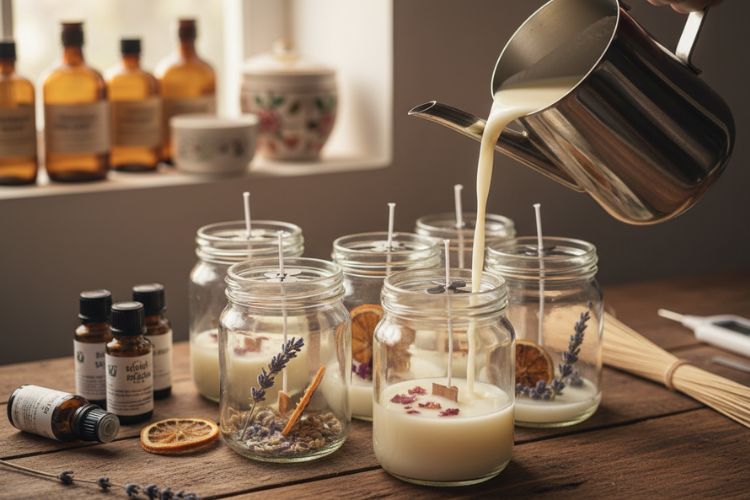
Candle making has been practiced for centuries. In ancient times, candles were essential for lighting homes, temples, and streets after sunset. Early candles were often made from materials such as animal fat or beeswax. While these candles served a practical purpose, they were simple and not always pleasant to burn because of the smoke or odor.
Over time, the craft improved as new materials and techniques were developed. As electricity became common, candles slowly shifted from being a necessity to becoming a decorative and atmospheric element in homes. Today, candle making is valued not only for its function but also for its creativity. Artisans experiment with fragrances, wax blends, and container styles to create candles that enhance the mood of a room.
Understanding how candles are made helps people appreciate the effort behind a quality product. A well-crafted candle is not produced quickly. It requires patience, knowledge of materials, and attention to detail during every stage of production.
Hand-poured candles stand out because they are made through a slower and more controlled process. In large factories, candles are usually produced in huge volumes using automated machines where the focus is on speed and efficiency. While this allows companies to create thousands of candles quickly, it can sometimes reduce the level of care given to each product.
Hand-poured candle making follows a different approach. Candles are produced in smaller batches, and each step is carefully managed. The wax is heated to the right temperature, fragrance is added at the proper stage, and the wick is placed by hand. This level of attention is one reason many people choose handcrafted options when buying gift scented candles, as they feel more thoughtful and unique.
Because of this careful process, hand-poured candles often burn more evenly and release fragrance more smoothly. The focus on quality rather than quantity is what makes them appealing to many candle lovers, whether they are decorating their space or choosing scented candles as gifts for someone special.
The ingredients used during candle making play a major role in determining the final quality of the candle. Choosing the right candle-making material ensures that the candle burns cleanly, releases fragrance well, and lasts longer.
Wax forms the foundation of every candle. Several types of wax are commonly used in candle making. Soy wax is popular because it burns cleanly and holds fragrance well. Beeswax is valued for its natural qualities and long burn time. Coconut wax is known for its smooth texture and excellent scent throw. Some candles use carefully balanced wax blends to achieve specific results.
The choice of candle-making material often depends on the desired performance of the candle. Natural waxes are often preferred because they burn more slowly and produce less soot.
The wick plays a critical role in how a candle burns. If the wick is too small, the candle may tunnel and fail to melt evenly across the surface. If the wick is too large, the candle may burn too quickly or produce excess smoke. Cotton wicks and wooden wicks are both widely used, and each creates a slightly different burning experience.
Fragrance oils give candles their personality. During candle making, fragrance must be added at the correct temperature so it blends properly with the wax. A well-balanced candle releases scent gradually and fills the room without becoming overpowering.
Containers also matter in candle design. Glass jars, tins, and ceramic vessels are common choices because they are heat-resistant and visually appealing. When combined with the right candle-making material, these containers help create candles that look elegant and perform consistently.
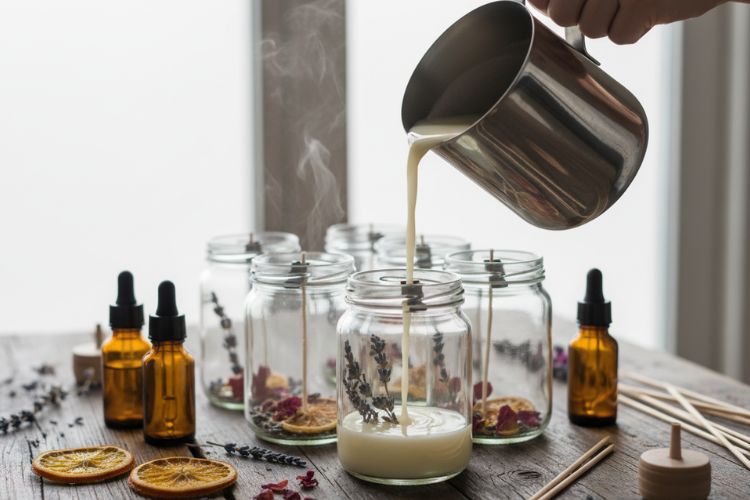
Understanding how candles are made step by step reveals the skill involved in producing high-quality candles.
The process begins by preparing a clean and organized workspace. Containers are arranged, wicks are secured at the center, and tools are set up for measuring wax and fragrance.
Wax is measured carefully and melted slowly. Maintaining the correct temperature is essential during candle making because overheated wax can affect fragrance quality and texture.
Once the wax reaches the right temperature, fragrance oils and dyes are added. The mixture is stirred thoroughly so that scent and color distribute evenly throughout the wax.
Before pouring, the wick must be secured and centered inside the container. This ensures that the candle burns evenly and forms a proper melt pool.
The wax is poured gently into the container and then left to cool. One of the most important parts of how candles are made is the curing stage. Candles are allowed to rest for several days so the wax and fragrance can bind together properly.
Once the candle has cured, the wick is trimmed to the correct length, and the surface is inspected. At this stage, the candle is ready to be used or packaged.
Candles made with care often perform much better than mass-produced options. A well-crafted hand-poured candle creates an even layer of melted wax on the surface, which helps it burn steadily without forming tunnels. This even burn not only makes the candle last longer but also allows the fragrance to release more consistently.
The choice of materials plays a key role in burn quality. Natural wax blends paired with correctly sized wicks produce less smoke and soot while ensuring the scent fills the room evenly. Because each hand-poured candle is made with attention to detail, it delivers a smoother, more reliable burn that enhances the overall experience.
Candles play a powerful role in shaping the atmosphere. The combination of fragrance and soft light can transform an ordinary room into a calm and inviting space. A warm vanilla scent may create comfort during quiet evenings, while fresh citrus fragrances can energize a workspace.
Many people choose to buy scented candles because they want to create specific moods in their homes. Lighting a candle during a relaxing evening, a dinner gathering, or a quiet reading session adds warmth to the environment. The gentle flicker of the flame encourages people to slow down and enjoy the moment.
Because scent is strongly connected to memory, a candle can also remind people of special places or meaningful experiences. This emotional connection makes candles more than decorative objects.
One of the best parts of candle making is the chance to create something unique. Many artisans mix different fragrances, combine seasonal scents, or play with subtle color tones to give each candle its own character. Some add stylish jars, textured containers, or carefully designed labels to match a particular style or mood.
This creativity is also why candles make thoughtful gifts. People often pick out gift scented candles for birthdays, holidays, or housewarming events because they are personal and practical. A well-made candle can match a favorite scent, suit a style, or capture the feeling of a season. Giving a handcrafted candle lets someone enjoy a small, thoughtful gesture every day.
Simple touches like layered scents or arranged colors help the candle stand out and catch on with those who appreciate something special. Personalizing a candle turns it into more than a decoration. It becomes a meaningful part of daily life.
When selecting a candle, it helps to understand the basics of candle making. A quality candle will usually use natural wax blends, a properly centered wick, and balanced fragrance oils. The scent should feel pleasant and not overly strong when the candle is unlit.
Looking at the ingredients and design can reveal a lot about the quality of a candle. Candles that use well-chosen candle-making material and allow proper curing time tend to burn more evenly and last longer. Paying attention to these details helps ensure a better overall experience.
Candle making is more than a hobby. It combines creativity, skill, and patience to create pieces that are both beautiful and functional. Every step, from choosing wax and fragrance oils to pouring and curing, contributes to a candle that feels personal and unique.
A well-made candle does more than provide light. It adds warmth, inviting aromas, and character, turning any space into a cozy retreat. Whether used to relax, enhance décor, or given as a thoughtful gift, candles hold a timeless charm.
Nothing transforms a room like a perfectly crafted candle. BK Crafts hand-pours each candle in Houston using high-quality wax and carefully blended fragrances. Ideal for relaxing at home or as gift scented candles, these candles turn everyday moments into something memorable.




Get on the list and get 10% off your first order!