
Many people enjoy lighting candles to create a cozy atmosphere at home. But if you share your space with a cat or dog, you may find yourself wondering whether that candle could affect your pet. Questions about candle safety with pets have become more common as pet owners pay closer attention to the products they use indoors.
One of the major concerns is fragrance. Pets perceive the surroundings differently from humans, particularly regarding smell. A scent that feels pleasant to you may seem much stronger to your pet. This often leads people to ask whether scented candles are actually safe around animals.
This is not always an easy question to answer. There are various factors that need to be considered. Learning about these issues can help you find ways to make your environment comfortable both for yourself and for your pet.
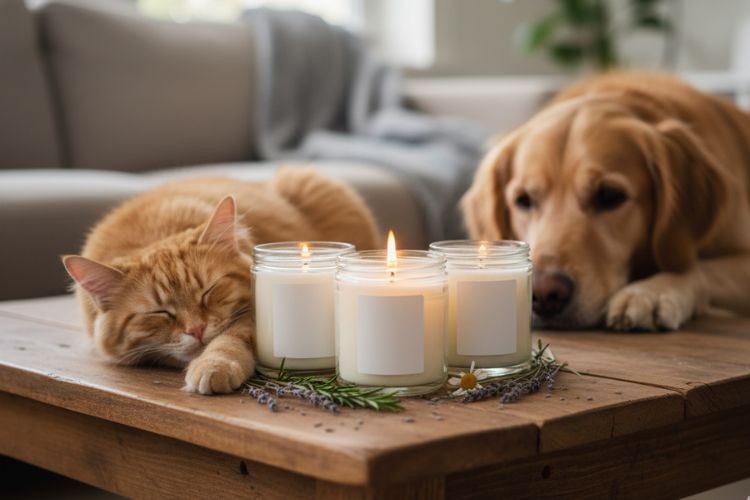
One of the most common questions pet owners ask is, “Are scented candles safe for cats?” In many cases, a well-made candle used responsibly is unlikely to cause problems for healthy pets. However, not all candles are made the same, and not all pets react the same way to fragrances.
Safety in the use of candles is determined by many variables. The composition, the type of wax, the scent of the fragrance, and ventilation in the room will play a role in this. Certain pets do not react at all, while some may be more prone to certain scents or air particles.
This is why candle safety with pets should focus on both the candle itself and your pet’s behavior. Paying attention to how your pet responds can help you determine whether a particular product is a good fit for your home. This is worth considering not only when buying candles for yourself but also when choosing scented candle gifts for friends or family who have pets.
It is important to understand that cats and dogs perceive the environment differently from humans. The animals have an excellent sense of smell. Therefore, they may react differently to particular substances present in the product. That means that something that works well for one animal may irritate the other one. Knowing about those differences is necessary for choosing a safe candle for a pet.
Cats and dogs have a much stronger sense of smell than humans. While a candle fragrance may seem mild to you, your pet may experience it much more intensely. This doesn’t automatically mean the scent is harmful, but it can explain why some pets leave the room when a candle is lit.
When people ask whether scented candles are safe for cats, they often do so because cats can be more sensitive to certain substances. Cats process some compounds differently from dogs and humans. This is especially important when candles contain essential oils or heavily concentrated fragrance blends.
That doesn’t mean every scented candle is dangerous. It simply means cat owners should pay close attention to ingredients and observe how their pets respond.
Dogs can also be sensitive to strong scents, but reactions vary from one animal to another. Some dogs ignore candles completely, while others may avoid rooms with strong fragrances. Individual sensitivity, age, and health conditions can all influence how a dog reacts.
If you have pets at home, reading a candle label can be just as important as choosing a scent you enjoy. Certain ingredients may affect how a candle burns or how strongly it releases fragrance, making it worth understanding the basic components before buying.
Fragrance oils are responsible for a candle’s scent. Some are mild, while others are much stronger. Strong fragrances may be overwhelming in small spaces, especially when multiple candles are used at the same time.
Essential oils are commonly considered natural substitutes, yet just because something is natural doesn’t automatically make it pet-friendly. There may be some essential oils that would be problematic for some pets, especially cats. It is best to learn more about a product first if you are uncertain about the ingredient.
The wax used in making candles impacts their performance. There is paraffin, soy, and beeswax, each of which has varying characteristics while being burnt. For most pet owners, candles that are made of pet-safe wax are preferred since they are cleaner-burning.
High-quality wicks help ensure even burning of the candle. On the other hand, poor-quality wicks are associated with increased smoke production. Therefore, when shopping for pet-safe candles, it is equally important to consider wick materials.
Most pets will not experience any adverse reactions when near candles, though there are pets that may react negatively depending on their fragrances or other irritants released in the air from candles. Several factors can contribute to how well your pet will tolerate being near candles, including their age and health condition, among others.
An animal with pre-existing respiratory issues can react more intensely to air-borne irritants. Should your pet start exhibiting symptoms such as coughing, wheezing, or difficulty breathing whenever the candle is lit, the product may require reassessment.
Strong fragrances can sometimes cause watery eyes or increased sneezing. While occasional sneezing may not be alarming, repeated irritation should not be ignored.
Occasionally, pets try to show their discomfort by changing their behavior. For example, if your cat keeps leaving the room where you’ve just lit the candle, or your dog seems to get anxious because of it.
If symptoms seem severe or persistent, it’s best to contact a veterinarian. Professional advice is especially important if your pet appears distressed or experiences breathing difficulties.
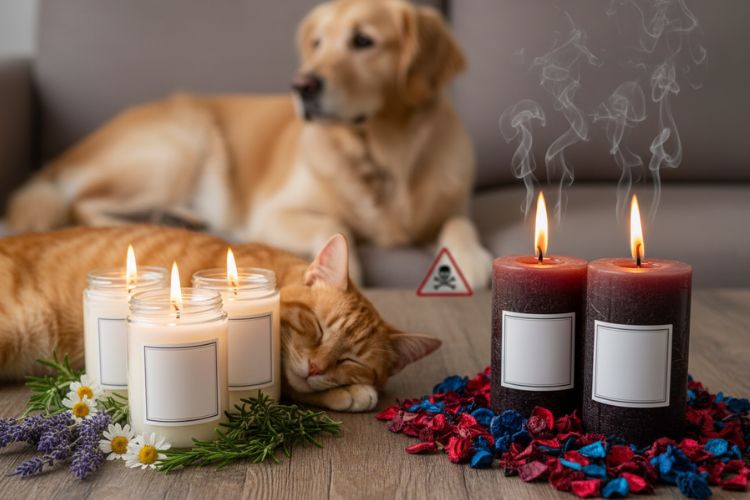
In general, lighter fragrances tend to be easier for many pets to tolerate than highly concentrated scents. Strong seasonal fragrances and heavily scented products can sometimes feel overwhelming in smaller spaces.
The key is moderation. Burning one candle in a well-ventilated room often creates a different environment than burning several candles in a confined area. If you’re unsure whether scented candles are safe for cats in your specific situation, starting with milder fragrances may be a sensible approach.
A few simple precautions can help make scented candles safer to use around pets. Keeping candles out of reach and burning them in well-ventilated areas can reduce potential risks.
Regular candle maintenance is also important. If you’re wondering how to reduce candle smoke, trimming the wick before each use is one of the easiest and most effective steps.
It’s also a good idea to keep candles away from drafts and never leave a burning candle unattended, especially in a home with curious cats or dogs.
All responses are not always easy to discern. There might be some indicators that are quite discreet.
Look out for constant sneezing, tearing eyes, persistent grooming, coughing, and odd restlessness. Some animals might decide to vacate the room once you light up a candle. Although this doesn’t mean there’s anything harmful about it, it might mean that the smell is too strong for them.
Behavior observation might just be one of the easiest methods of checking whether the candle suits your abode.
When shopping for candles, look for products that provide clear ingredient information. Transparency makes it easier to evaluate what you’re bringing into your home.
Many people searching for pet-safe candles prefer products made with quality waxes, reliable wicks, and moderate fragrance levels. The goal is not necessarily to eliminate fragrance but to choose products that create a comfortable environment.
Some pet owners also prefer small container candles because they allow fragrance testing without committing to a larger product.
Living with pets doesn’t mean you have to give up scented candles. In most homes, candles can be enjoyed safely when a little extra care is taken. Paying attention to ingredients, choosing appropriate fragrances, and watching how your pets respond can help you make better decisions for your space.
Every pet is different, so what works well in one home may not be the best fit for another. The key is finding a balance between creating a pleasant atmosphere and keeping your pets comfortable. By keeping candle safety with pets in mind, you can continue enjoying your favorite scents while maintaining a pet-friendly environment.
When choosing candles for a pet-friendly home, quality matters. BK Crafts offers thoughtfully crafted candles made with attention to ingredients and burn quality, helping you create a comfortable atmosphere while making informed choices for your space.
Can scented candles make cats sick?
Some cats may be sensitive to certain ingredients or strong fragrances. Reactions vary, which is why monitoring your pet’s behavior is important.
Are dogs sensitive to scented candles?
Yes. While most dogs can handle candles just fine, there are some that might have problems with their smells or irritants.
Which is better for pets, soy candles or paraffin wax?
The type of wax is not the only thing that matters here. There are other things as well.
Are essential oil candles safe for cats and dogs?
Some essential oils may be more concerning for pets than others. Researching ingredients before purchase is recommended.
What should I do if my pet reacts to a candle?
Extinguish the candle, improve ventilation, and monitor your pet. If symptoms persist or worsen, contact a veterinarian.
