
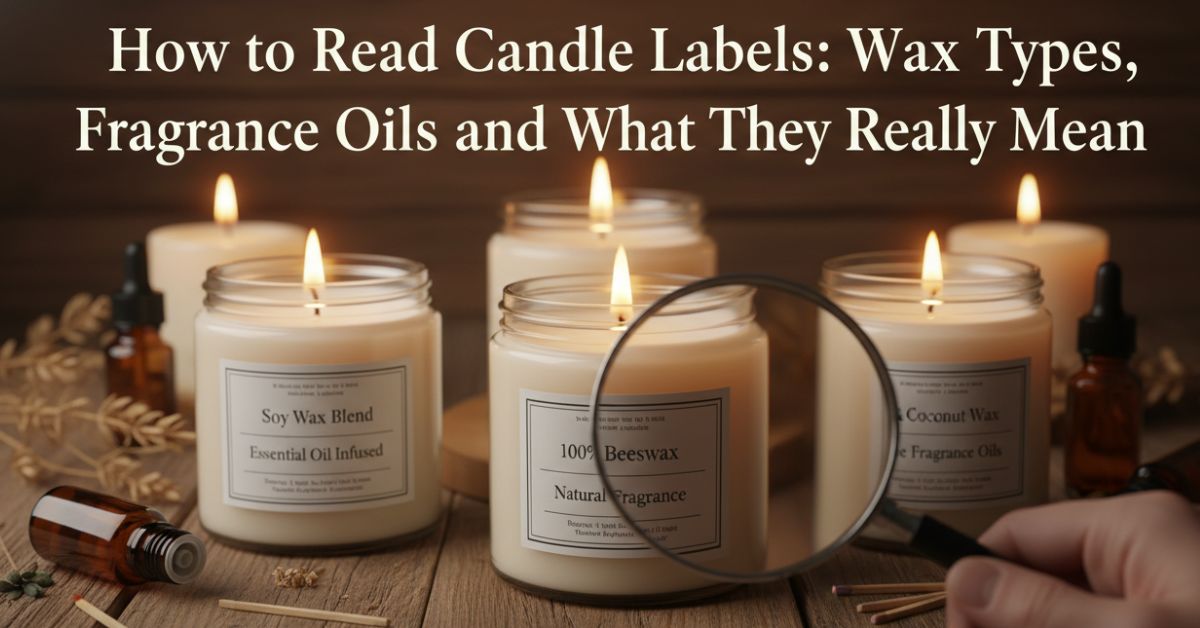
Have you ever picked up a candle, flipped it over, and felt completely confused by the label? You are not alone. Most people look at the scent and design but skip what really matters.
Understanding candle labels is more important than it seems. What you burn in your home affects the air you breathe, especially if you use candles often. This guide will walk you through everything in a simple way so you can stop guessing and start choosing better candles with confidence.
It is easy to assume all candles are the same, but that is not true. Many contain hidden ingredients that are not clearly explained.
Poor-quality candles can affect indoor air without you even realizing it. That is why learning to read candle safety labels helps you make smarter choices for your home and your family.
When you start paying attention, you begin to notice the difference between a basic candle and one made with care. It helps you pick something that feels good and burns clean.
One of the first things you should check is the wax. Different candle wax types burn differently, and this plays a big role in safety and quality.
Paraffin wax is the most common option. It is affordable and widely used, but it is made from petroleum. While it gives a strong scent, it can produce more soot compared to other options.
Soy wax is plant-based and burns cleaner. It is a popular choice for people looking for safer options. Many people switch to it when they start paying attention to candle labels and want something more natural.
If you are exploring better options, you can check out a premium soy candle collection that focuses on cleaner burning and softer scents.
Beeswax is one of the most natural choices available. It burns slowly and produces very little smoke. When comparing beeswax vs soy candles, both are good, but beeswax is often seen as a more premium option.
Coconut wax is a newer option and is often mixed with other waxes. It burns smoothly and is considered eco-conscious. Many modern brands combine it with soy to improve performance.
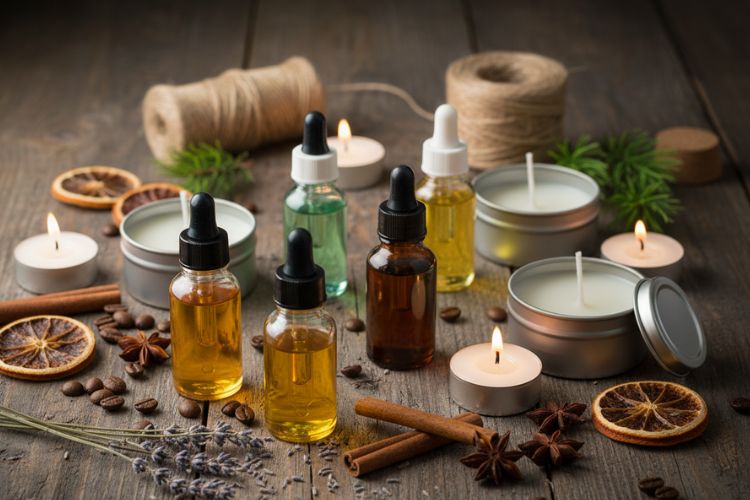
Fragrance is what usually pulls you in when you pick up a candle. You smell it, you like it, and you are ready to take it home. But this is also the part where things can get a little confusing, especially when you start reading candle labels more carefully.
Synthetic fragrance oils are made to create strong and long-lasting scents. That is why some candles can fill up an entire room within minutes. While they smell amazing, they may include chemicals that are not always clearly mentioned on candle labels. So it is always a good idea to pause and check what you are actually bringing into your space.
If you prefer something softer and more natural, essential oils are a great option. They give a lighter, more subtle fragrance that feels calm rather than overpowering. Many people lean toward these when they are trying to create a relaxing environment or simply cut down on unnecessary chemicals in their home.
You may have come across the term “phthalate-free” and wondered what it really means. Phthalates are chemicals often used in fragrances to make scents last longer. However, they have raised some health concerns over time.
Candles labeled as phthalate-free are generally considered a safer choice for everyday use. That is why taking a moment to go through candle safety labels properly can really help you choose better and feel more confident about what you are using at home.
Marketing terms can sound very convincing, and it is easy to get carried away when everything looks premium and safe at first glance. But when you slow down and really read candle labels, you realize that not all terms mean exactly what they seem.
The term non-toxic sounds reassuring, but it is not strictly regulated. This means a candle can still contain some synthetic ingredients and be labeled this way. Instead of relying only on the wording, it is always better to check the full ingredient list and understand what is actually inside.
Clean burning candles are usually designed to produce less soot and smoke. However, this does not depend on one factor alone. The wax type, wick quality, and even how you burn the candle all play a role. A well-made candle with the right combination will burn more evenly and feel lighter in your space.
Eco-friendly candles focus on sustainability, but the term can be broad. It may refer to natural wax, recyclable packaging, or responsible sourcing. Still, it is important not to take the label at face value. Take a moment to look deeper into the details so you can choose something that truly aligns with your values.
When you start paying attention to candle safety labels, these small differences become easier to spot, helping you make more confident and informed choices.
So how do you actually choose the right one? Let’s break it down into simple steps.
When comparing beeswax vs soy candles, both are safer options, so it depends on your preference and budget. Taking a few extra seconds to read candle labels can help you avoid low-quality products and bring better choices into your home.
Sometimes, it is easier to spot what to avoid.
If something feels off, it probably is. Trust your instinct and do not rush into buying.
Learning how to read candle labels may feel confusing at first, but once you get the hang of it, everything becomes much easier. You start noticing what works for your home and what does not.
If you are looking for high-quality options that focus on clean ingredients and thoughtful design, explore bkcrafts.org. Whether you are choosing something for yourself or browsing gift scented candles for someone special, the right candle can truly transform a space.
Take your time, read the label, and choose what feels right for your home.
How do I know if a candle is non-toxic?
Look for natural wax, simple ingredients, and phthalate-free fragrance. Always read the full label.
Are fragrance oils safe in candles?
Some are safe, especially when used in small amounts. Natural options are generally better.
Which wax is best for candles?
Soy and beeswax are among the safest and most popular choices.
What does clean-burning candle mean?
It means the candle produces less smoke and soot when burned properly.
Are expensive candles always better?
Not always. Price does not guarantee quality. Always check the ingredients.
